Sunday, May 3, 2015

Post SLO

      My time in the Honors Mentorship Program has been spectacular. Working at NHMS couldn't have better prepared me for college and the world of Music Education. I have found during my mentorship that there is a lot of time, preparation, and practice that I have to put in to be a successful band director, but because of my experiences, I now have the knowledge I need to know how to manage my time and resources. The kids have also taught me a lot about myself and the band program. I was never the most patient human being, but because I am working with beginning musicians, I have learned how much easier life is if I just take a little more time to be sure the kids are getting it right.
When I started in the mentorship program, I was working in a law office. At the time, I was chasing money. It wasn’t long before I realized that no amount of money is worth sitting in a room alone without my horn. So, I made the switch to pursue a career in music. I left the middle school my first day thinking “Yep. This is what I’m going to spend my entire life doing.” 

I plan to use my experience in HMP to become a high school band director. I love the amount of variety there is in the band classes in high school. My real passion as a musician is in jazz and music history, and both of those options are available to me and the other students who share my interests. Though the variety of a high school band is not present in a middle school, I chose to work at North Hall Middle School for one reason: Rob Dugan. He exemplifies all that a band director should be. He has a passion for sharing his love and knowledge of music with his students. I learned this through my three years as a student. He is my model for what a band director is supposed to be. When I run my own band program, I will remember HMP and that it allowed me to be absolutely sure of what I "want to be when I grow up."
As for the students coming into HMP, I would make sure they know how much ridiculous online work there is, but also that its worth all the frustration to get to be immersed in the career for which they have a passion.
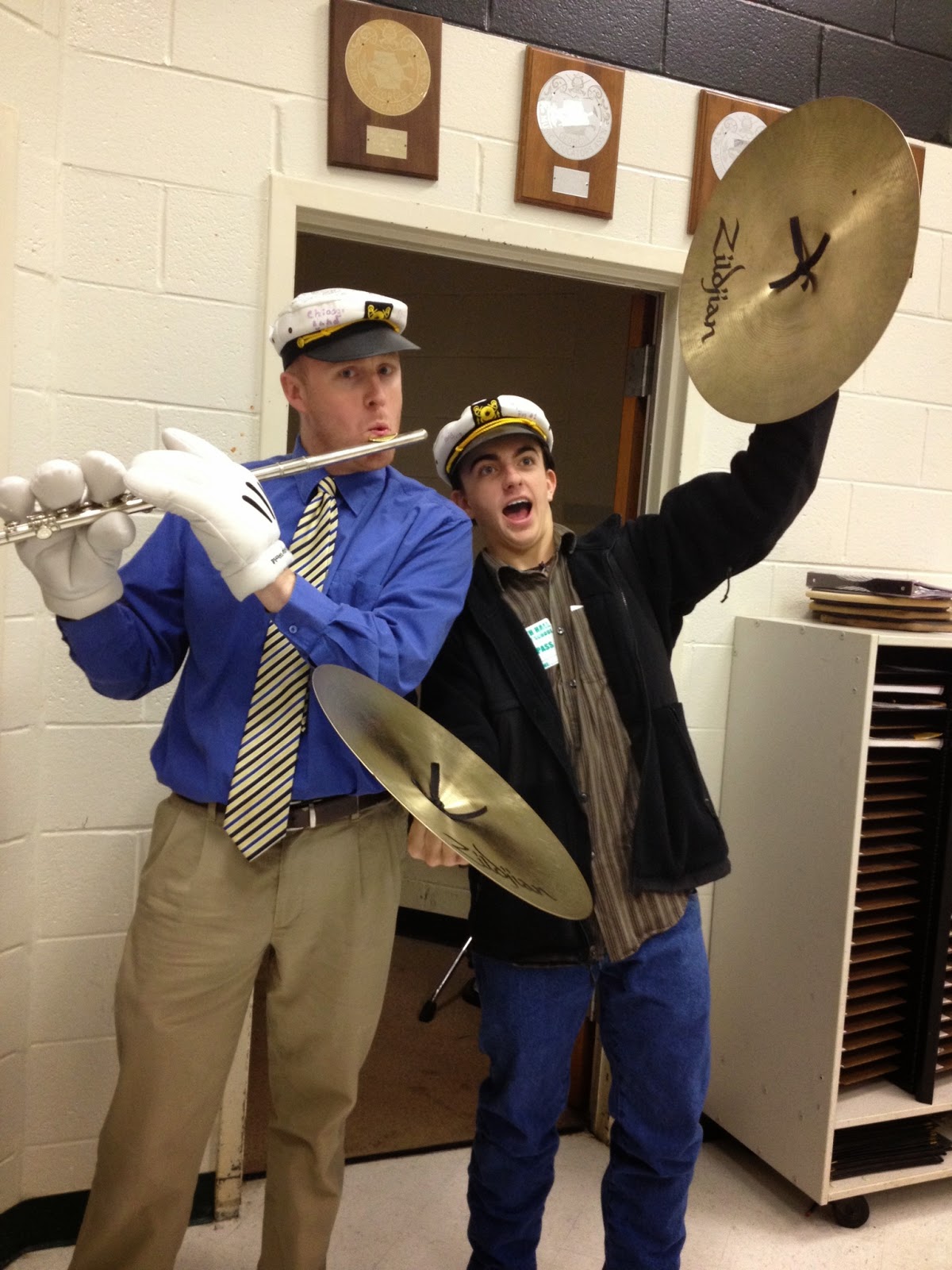
Photo taken by Rebecca Fisher

Monday, March 16, 2015

Public Speaking Video Reflection

     When it comes time to present, I know I'll be perfectly fine. As a singer, I am apparently one of the 30% of people who don't suffer from a fear of public speaking. But there are some points in the video what I had never considered. I never thought to avoid eating a lot before I speak or to bring a bottle of water with me to avoid getting all choked up on phlegm (as nasty as that seems, it is a valid concern).
     I didn't realize that I already do most of what the video suggests. I try to be as funny as is necessary, so my listeners can be assured to get a couple of laughs in during my presentation. Some people always stare at their cards when they present. That bothers the heck out of me. When I present, I rarely have more and a couple of bullet points on a card and I try to make eye contact with everyone in the room at least once. All in all, I think I can be pretty confident in my ability to deliver on presentation night.

Sunday, March 8, 2015

Progress

     From my time at NHMS, I'm completely set on being a band director. I'm currently looking into the music education programs at both UGA and Kennesaw State (both schools have outstanding programs). Once I'm out of college, I will hopefully get to start as a high school band director, though  middle school band is also very appealing.
     I have found that I really enjoy conducting the band. It was an almost frightening experience the first time, having that much control over a group. But, I have gotten more comfortable with it and its really great fun. These past few months have been some of the most eye opening of my life.

Tuesday, February 10, 2015

Planning the Final Project

     For my final HMP project, I will of course be answering the question: How does band help a student in other ares of school and in their everyday lives? To do this, I will be filming myself asking the kids questions about how they view band and how they think it has helped them. Also, interviews with accomplished music educators and other respected teachers in which I ask them questions such as: What difference do you see in the academic performance between band kids and non-band kids? and What kind of attitude does a typical band student have toward school as opposed to a non-band student? I will compile these clips into a kind of short documentary on the subject.

Monday, February 9, 2015

Music Educator Interview

     In the interest of finding out how music helps students in other areas of school, I asked my mentor about his thoughts on the subject. These were the questions and his responses.


How does an understanding of music help kids in Math?

-Subdividing (dividing the beat into 4ths, 8ths, etc.) helps kids be able to divide quickly off the top of their head


How does an understanding of music help kids in language?

-Since music is written in italian, kids get exposure to a very different romantic language (as english is a germanic language)


How does an understanding of music help kids in history?

-The music of a given time period (Baroque, Classical, Romantic, Contemporary, etc.) reflects the “attitude” of that time period


Does help a student emotionally as well as academically?

-Yes. Kids sometimes, without realizing it, get a bit of a “break” from their daily stress when they get to play their horn in band class. 


Have you seen a student become more motivated by band?

-Since band requires a lot of hard work and self discipline, students almost subconsciously push themselves in every aspect of their lives because of band. 


(Derived from previous question) Do you see a students drive to succeed progress through their 3 years?

-The students who stay in band all the way through middle school tend to have a more lasting positive attitude towards school, which can translate to academic success. 


Does a student who is a superior player perform better in school than one who doesn’t play their instrument as well?

-As long as the student is dedicated to practicing and disciplining themselves, their level of skill on their instrument doesn’t have a very big affect on their academic success.


How did you do as a student since you were in band?

-I (Dugan) was pretty successful as a student and I partly credit what I learned from being in band to that success.


Did you see that drive for success in me when I was your student?

-You (Gage) had a way of thinking about everything objectively and analytically, which is seen a lot in a student who is gifted in music.

Wednesday, January 14, 2015

Looking Ahead

     For the final project, I will ask the question: How does learning music help a student in other aspects of school? This is an important question for me to answer because some schools don't realize how important the music program is, and they cut it simply because its the most expensive program. When I present this to the people, there is one thing that would make a future band director's presentation particularly outstanding: A performance by the students. I've talked to a few of them and they have mentioned how band has made their middle school life much better. I think it would be great to have a video of the kids talking about how band has affected their lives. As my final inquiry, I will interview the music educators that I have worked closely with and allow them to give their opinion on the affect music has on their students' lives.

Monday, November 24, 2014

Essential Question

My essential question:
   
      How does learning to play a musical instrument facilitate other aspects of learning?

I chose this as my essential question because most kids wouldn't think that learning an instrument has a real impact outside the band room. I knew I had to look further into that idea when I realized how much more interest kids have in a subject when they are told they can apply it in their everyday life. This question does reflect my interest in the topic because its something that neither I, nor most people (as far as I know), have ever thought about. And who doesn't like to learn weird things like that?


Saturday, November 15, 2014

Background Experience

     Over the past month, I have been working as almost a second Mr. Dugan with the bands at North Hall Middle School. I have worked on building the students as individual players by working with them one-on-one, as well as working with them as entire bands. During our off time, me and Mr. Dugan talk about what he does when he's not working with a band (i.e.. choosing music, lesson plans, grades, etc.). We have discussed giving me opportunities to work on conducting with the older bands.
     I have applied what I have learned in my Symphonic Band class to my work at the middle school. Watching Mr. Carwile (director of bands at NHHS) work has showed me how a rehearsal should be run. I have been in Symphonic Band, which is the advanced band class, for all 4 years of high school and I have seen the growth my friends and I have made and I hope I can make that growth happen in one year at the middle school.

Monday, November 10, 2014

Profile

About me: My name is Gage, and music isn't just what I do, its who I am. I take pride in my abilities as a performer and as a private instructor. I have played in many bands, but right now I am pursuing jazz as a drummer. Jazz is a very big deal to me because it is the most diverse kind of music and is filled with the most talented musicians on Earth.
I wasn't always terribly interested in teaching music until I was the low brass section leader this year. I got to see incredible growth in the rookies of the low brass and it made me realize that I could see that kind of inspiring improvement all the time if I was a band director, so thats what I decided to strive for.
My Mentorship: I found my mentorship later in the year than I should've. I started at a law office but quickly realized that wasn't my gig. If I'm not working with music, I'm not working at all. So I got transferred to North Hall Middle School to work with director of bands Rob Dugan and from the beginning it just felt right. I love working with the kids because I remember being their age and being excited to be learning an instrument. I get to see that same excitement on their faces every day and wouldn't trade that opportunity for the world.
My Future: I plan to go to Georgia State to get my masters in Music Education, then go to graduate school and get my doctorate in Conducting at the University of Georgia. From there I'll be directing either middle school or, preferably, high school band.

Sunday, November 9, 2014

Social Intelligence and the Modern Youth

http://growingleaders.com/blog/first-soft-skill-develop-students/

     After reading this article, I felt a little disappointed in my generation. While the article may have exaggerated a bit, I do see definite decline in etiquette between this generation and the last. The newest generation appears over-entitled and very self-absorbed, as the article says, and this is very true (coming from someone who is a part of it). There is a pretty drastic lack of formality in the way young people act in the workplace. I believe this comes from the media's push to destroy the sense of self worth in young people in recent years. Every commercial is aimed at making youth feel like if they have this one thing or are a part of this group, you will be thought highly of in society. Therefore, people believe that if they follow these trends, they can put themselves on the same level as their boss because they are "popular" in their group of friends or school or whatever they are a part of.
     This doesn't have to be a problem. I believe that all we have to do is just be our own people and make a stand against being slave to social media if we want to be looked at as professional. I see all too often on social networking parents or other adults ranting about how youth have no respect. One little fact they seem to have forgotten is that THEY raised this generation. Just a thought…

Wednesday, November 5, 2014

A Fresh Start

     Ok guys, I've made a change in my mentorship as well as my life. I realized over these past couple months that I can't put all I've got  into my mentorship or my career if I can't follow my real passion: music. I have changed my profession as well as my place of work. I am now working with director Rob Dugan at North Hall Middle School to pursue a career in music education. All of my following posts will come from my experiences in my new position. Wish me luck!

Sunday, October 19, 2014

Perception

     Before I started my internship in law, I thought of law as a challenge that would grab my interest. Now that I've been in it for a couple months, I've lost some that fiery interest. My brain is wired to come up with weird ideas and just be creative. What I have done so far has not at all allowed me to use any of my brain. I have just been sitting alone in my office researching various projects and programs to start at the CLC. While I have some mild control over how to develop the projects, I feel very confined to what I've been told to do and I don't have any room to branch out. The most surprising thing thus far has been that I am starting to feel like maybe I should look into a field that I can really use my creativity in such as marketing.
     The "boring parts" of my mentorship up to this point have actually been doing my real job at the office. Research to me is like grinding a cheese grader against my head. My breaks are getting to document and scan closed cases. Doing this helps out the office a lot because its work that tends to pile up because its generally deemed unimportant. It does feel good to know I've helped out in that respect at least.

Wednesday, October 15, 2014

Partners in Education

     As far as my education goes, working at the CLC has given me more valuable "real life" lessons than what I have learned in years of public education. Instead of standard school lessons about measurements, language skills, or how to mix chemicals, I've learned how the real legal system works. Granted I've not yet acquired the ability to defend someone in court, but I have the best "intro-to-law" teacher anyone could have.
     Arturo has given me the task of developing his "inner-CLC small businesses" if you will. I have finished development on a system of administering the GED exam to non-citizens. At the moment, because October is Domestic Violence Awareness Month, I'm working on creating a program to provide consultations and legal help to victims of domestic violence. I've a laundry list of other projects, but I've thoroughly looked into those two so far.
     Now all that being said, I have had spoke mixed feelings about the field of law. I find contracts fascinating and I believe I would make a good litigator, but at the same time, I feel very constricted in the way of creativity. My mind is always thinking up goofy ideas, some of them good, some of them bad, but I don't see how i could use those ideas in law. I'll see what I think as I learn more about the field but right now, I'm thinking that this could possibly not be the field of study for me.

Sunday, October 5, 2014

Getting into the "Swing of Things"

     In my brief time working at Corso Law Center (CLC), there are some interesting office politics. I didn't have to be working there very long to figure things out. The office politics is very simple and easy to grasp at a company where I work with a total of four different people.
     The first thing that was apparent to me was who the people in charge were. obviously, everyone is in charge of me, but it was very clear that, even though he is an attorney like most of the people there, Arturo Corso himself was the "top dog" if you will. Then you have the few other attorneys that work there, and a couple paralegals. Communication between me and the rest of the "team" at CLC is usually minimal because we usually work alone in our offices. This is not a bad thing to me because I know that what I am working on as well as what the others are working on is vital to the firm's success.
     There isn't much "gossip" around the office.. Occasionally we will all eat lunch together and talk. We are a pretty tight-nit group. There isn't anyone at the office that is often gossiped about in a negative way. At lunch, theres usually an entertaining story, but other than that, there is very little interaction between those of us that are at the office. I say those of us that are at the office because many times, a couple of them are gone in the short hour and a half that I am there. Every day has a different agenda, and therefore there is a different day-to-day schedule.
     The dress code at CLC is pretty relaxed compared to what I expected. I show up every day in a button-down shirt, jeans, and boots. Jeans are apparently not the norm because they aren't considered formal in all settings, but because I come from school and usually work alone in my office, I was told what I wear is suitable. The only exception is if I went to court to see Arturo work I would have to be in a full suit because a courtroom is a very formal place. Arturo will wear business-casual type clothing if he is working at the office all day, but occasionally he will come from court in a suit. Being a big guy, he is pretty intimidating, but when he is in the suit he seems less approachable because I don't know what kind of mood the time in court has out him in.  Don't get me wrong, Arturo is very easy-going and easy to talk to, but I'd rather not take my chances on court days.
     My research skills that i have picked up from years of school has been a great asset to my work here. I spend most of my time researching information on the various projects Arturo has assigned to me. The first thing I learned about project research at CLC is that in the field of law, no detail can be overlooked. I have to gather as much detail as I can about every little aspect of the project. Without all those years of writing research papers, I wouldn't be as confident in my ability to find the correct information. Based on my experience thus far at CLC, I can see my ability to gather information as being essential to my success at the firm.

Sunday, September 28, 2014

College Law Program Research

        After we graduate, we will be tossed into the college circuit. With the Honors Mentorship Program on my resume, colleges will view me as someone who is ready to get involved in their job and already has experience in my field of study. I am lucky enough to be interested in a subject that the best colleges in the southeast offer. These are the schools that caught my eye (formatted to the weekly assignment posted on 9/22).


1.         The University of Georgia
                Athens, Georgia
                http://www.uga.edu

Florida State University
    Tallahassee, Florida

The University of Alabama
    Tuscaloosa, Alabama

2. Business/Law, General Studies

3. The universities that caught my eye were the ones listed under step 1, but others include Clemson, Auburn, Ole Miss, and The University of Tennessee.

4. To get into law you must pass the LSAT exam.

5. -Must look at SAT/ACT scores
-Type of School: Public, Large, 4 Year, and Coed
-Location: South, Georgia
-Campus & Housing; Residential campus, freshmen can drive
-Activities: Must have a Marching Band
-Academic Credit: Must take Advance Placement credit

6. UGA Law School (my ideal law school): Ranked 29th of 204 of American Bar Association approved law schools.

7. -HOPE Scholarship
    - Zell-Miller Scholarship
    -David (DJ) Wright Davenport Scholarship
    - Tommy Aaron/Charlie Aaron Foundation Scholarship

Monday, September 22, 2014

Weekly Assignment 3

In Tim Elmore’s post on his blog Growing Leaders, http://growingleaders.com/, he gives an interesting perspective on how we interns view our internship. He refers to an internship as a “12 week interview.” I had never thought of it that way, but the more I think about it, the more it makes sense. An internship isn’t so much an interview for the one particular office you work at, but an interview into the world of the job of your interest. Though the class is called “Honors Mentorship,” its really, as Elmore says, “a simulation of the job you’ll have one day.” I have been given specific tasks at the law office i am working at, so it feels like I am really a working lawyer (except for the whole defending someone in court part of course). Elmore also gives us these 4 “ingredients” as he calls them, to help us be successful interns:
1. Teachability
2. Initiative
3. Responsibility
4. Energy
If we take these points, which I have taken to calling TIRE, we can guarantee a successful “mini-career” at our places of mentorship. 

Sunday, August 24, 2014

HMP SLO #2

I chose to intern with a lawyer because it interested me for 2 reasons:
1- I thought it would be a challenge, and I never turn down a chance to "strain my brain."
2- Everyone said I "have the head to be a lawyer.'' I never knew what they meant until I really started to do serious research into the field of law.
Through this program, i hope to gain the knowledge and experience necessary to prepare myself for law school and the real world of law. I plan to work as hard as I can in and out of court so I can be confident in my knowledge of the legal system ( and to make a good, lasting impression on my mentor Mr. Arturo Corso). Once I'm in law school, hopefully I will blow the professors out of the water with the amount of knowledge and experience I will have gained from my time in the mentorship program.

HMP SLO Blog # 1

Podcast on First Impressions:
   The information presented in this podcast was very similar to what was taught in our class at DaVinci. I was fascinated by the fact that a first impression is usually made in the first 10 seconds after meeting someone. The big points that were covered were:
Have a good attitude
Dress professionally
Speak to everyone equally and remember their names
Ask questions to learn how everything operates in the office
Take initiative
Work as much as possible and be on time or early (to me early is on time, on time is late)
Get into the "office politics" meaning: hang around the right people, and talk 20%, listen 80%


Getting to Know Your Mentor
   As always, make a good first impression. This seems like it can't be stressed enough. Its best to start friendly conversation with your mentor before you work with them intimately. You have to "break the ice" per say. Its best to ask about them first: What made them choose their career? What can I do during my time here to be productive in the office? Things like that. You should be prepared to answer questions like: What are your goals in this program? What do you plan to do after college? Why should i take time out of my day to work with you?
All of these things should be taken into consideration when meeting your mentor.